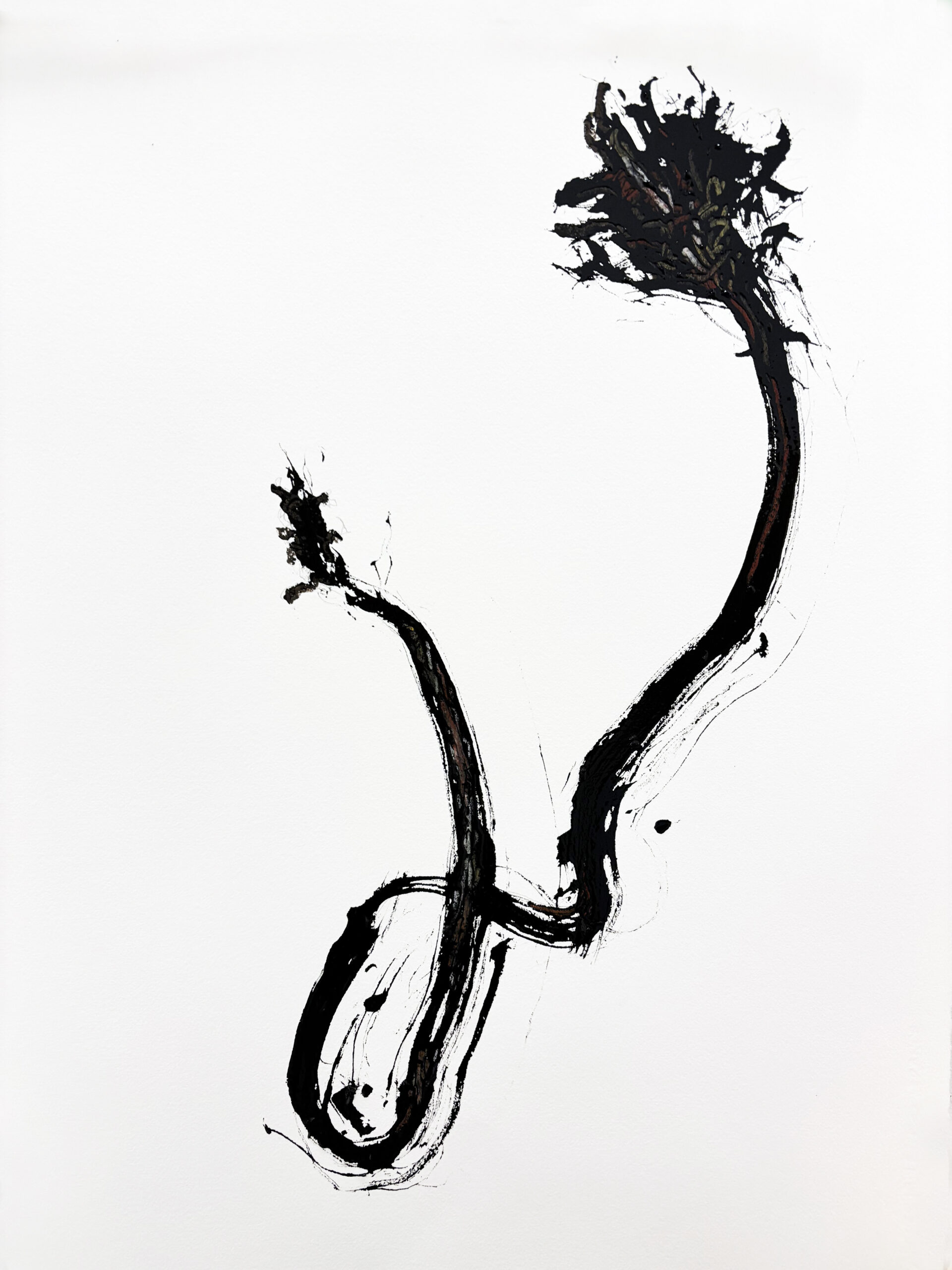
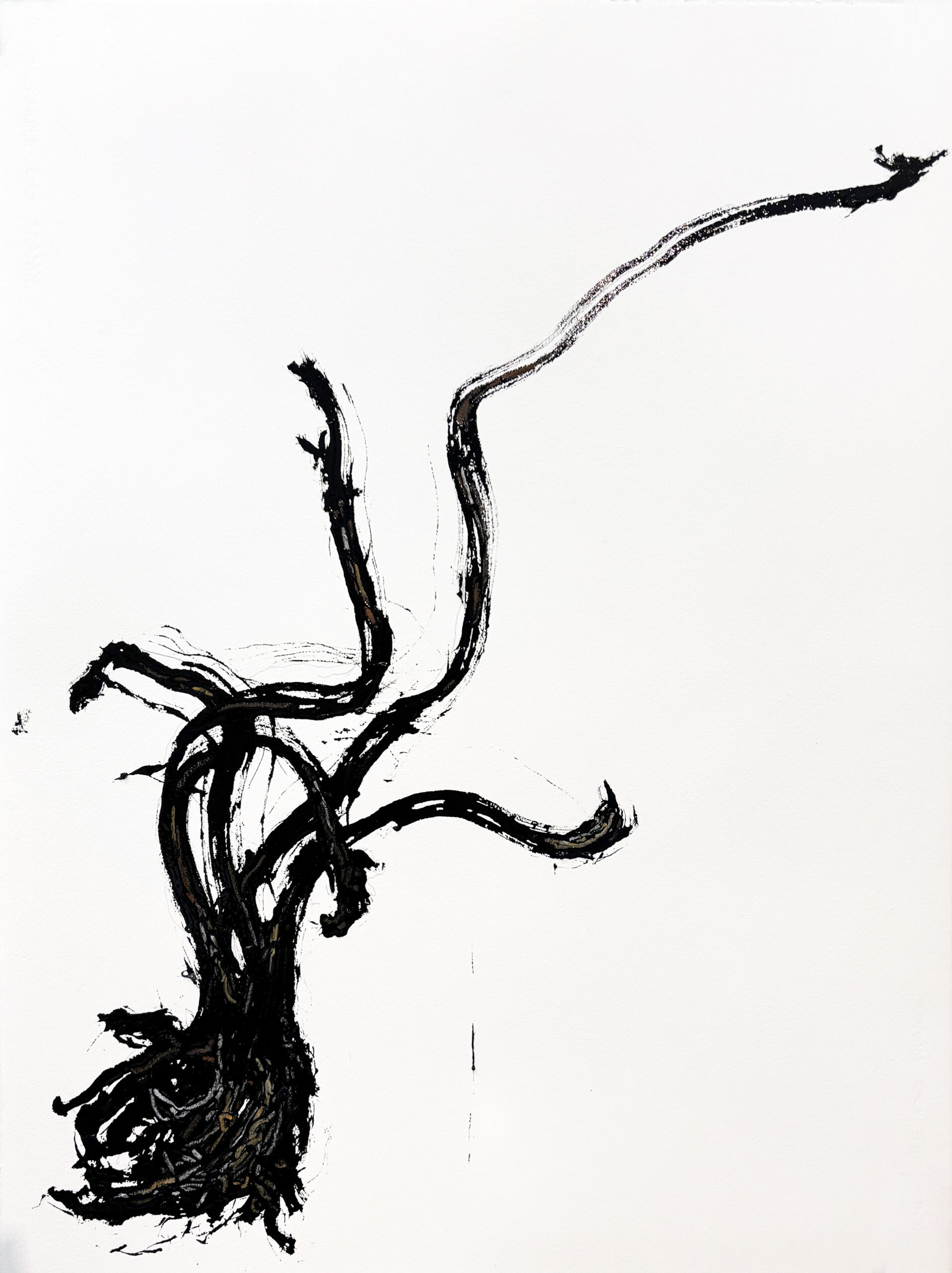
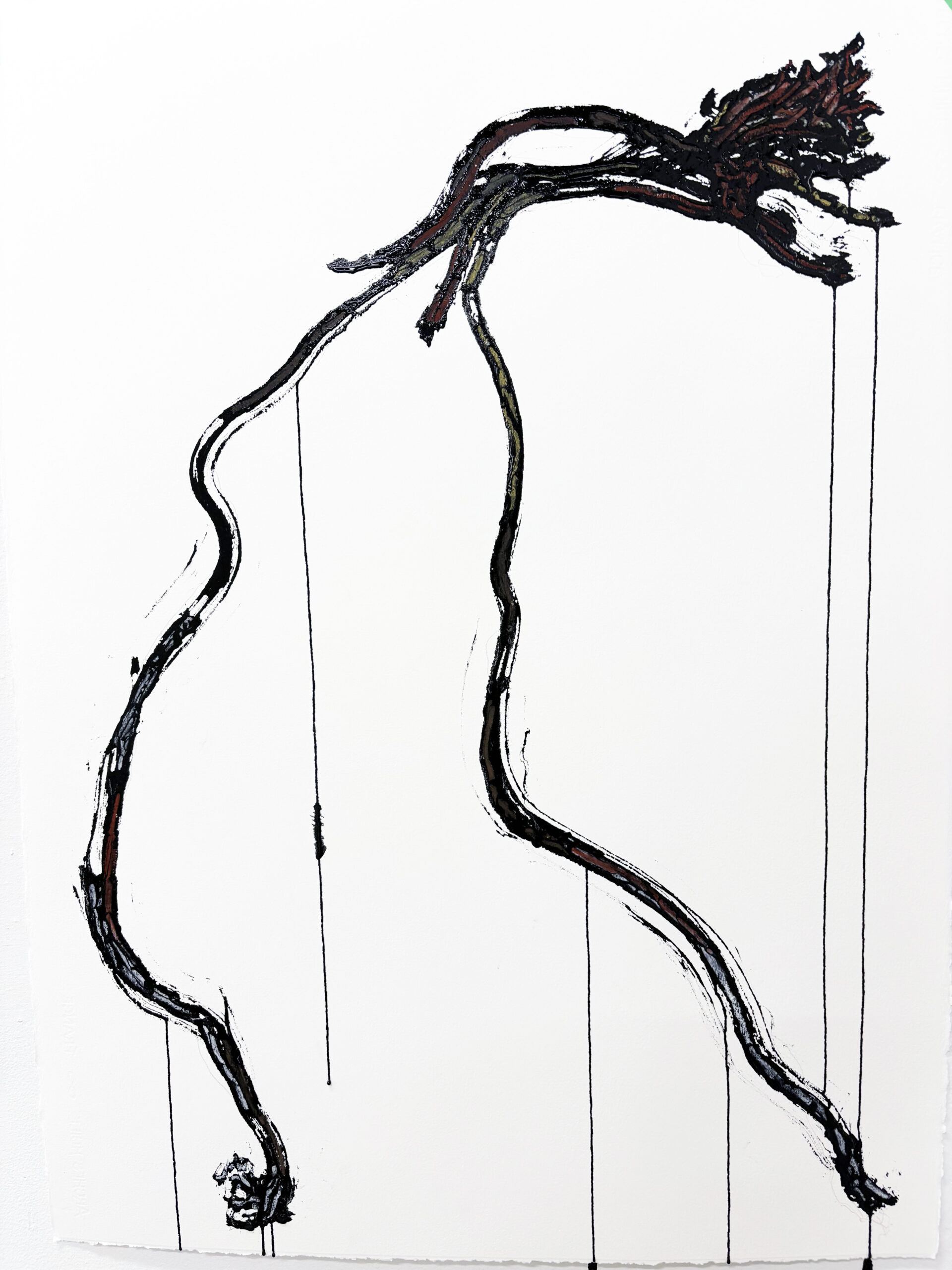
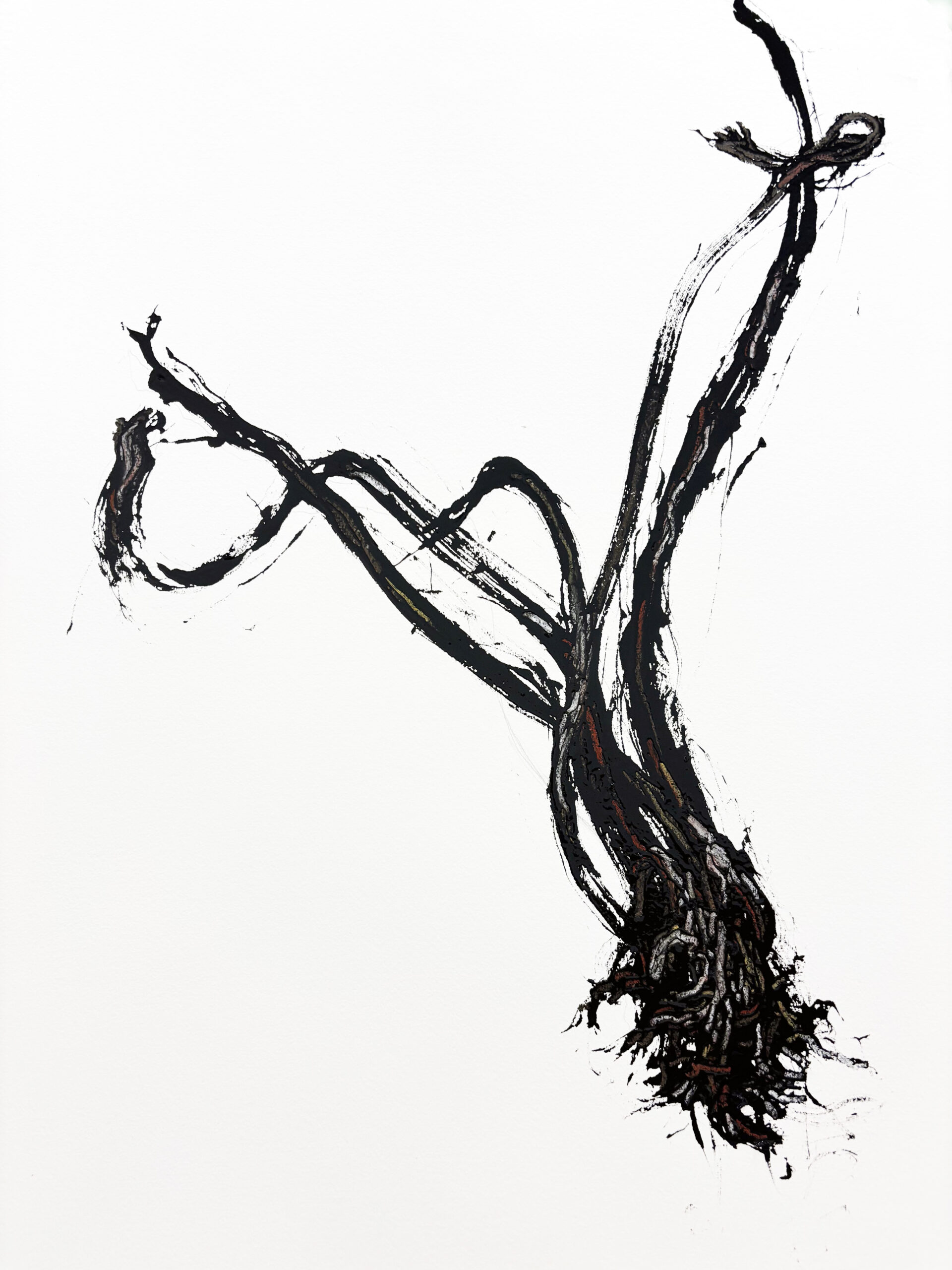
30″ x 22.5″, Walnut oil, Charcoal pigment, Oil Pastel, on Arches Paper, 2026.
Holfast I
Holdfast III
Holdfast IV
Holdfast II
Holdfasts, root-like structures, anchor seaweed, kelp, and some marine animals to rocks and hard surfaces in intertidal zones, preventing detachment during surges or heavy waves. Unlike roots, holdfasts grip, and do not absorb water or nutrients. Individual holdfasts extend outward until they contact the rock, at which point biochemical secretions allow the tissue to conform to the surface. Complex entanglement between holdfasts and rocky surfaces creates microhabitats sheltering diverse marine invertebrates. Climate change is changing the environment, but microclimates offer small refuges in challenging environments. Holdfasts provide thermal refuge for some species. It has been found that outside the holdfast, temperatures are 4.4°C higher in summer and 6.9°C lower in winter than inside.
My artistic exploration of holdfasts has yielded works that engage in a discourse on the intricate entanglement of species. Employing a discarded pampas grass stem as a brush and using charcoal pigment combined with walnut oil, the holdfasts gained a vibrant life.
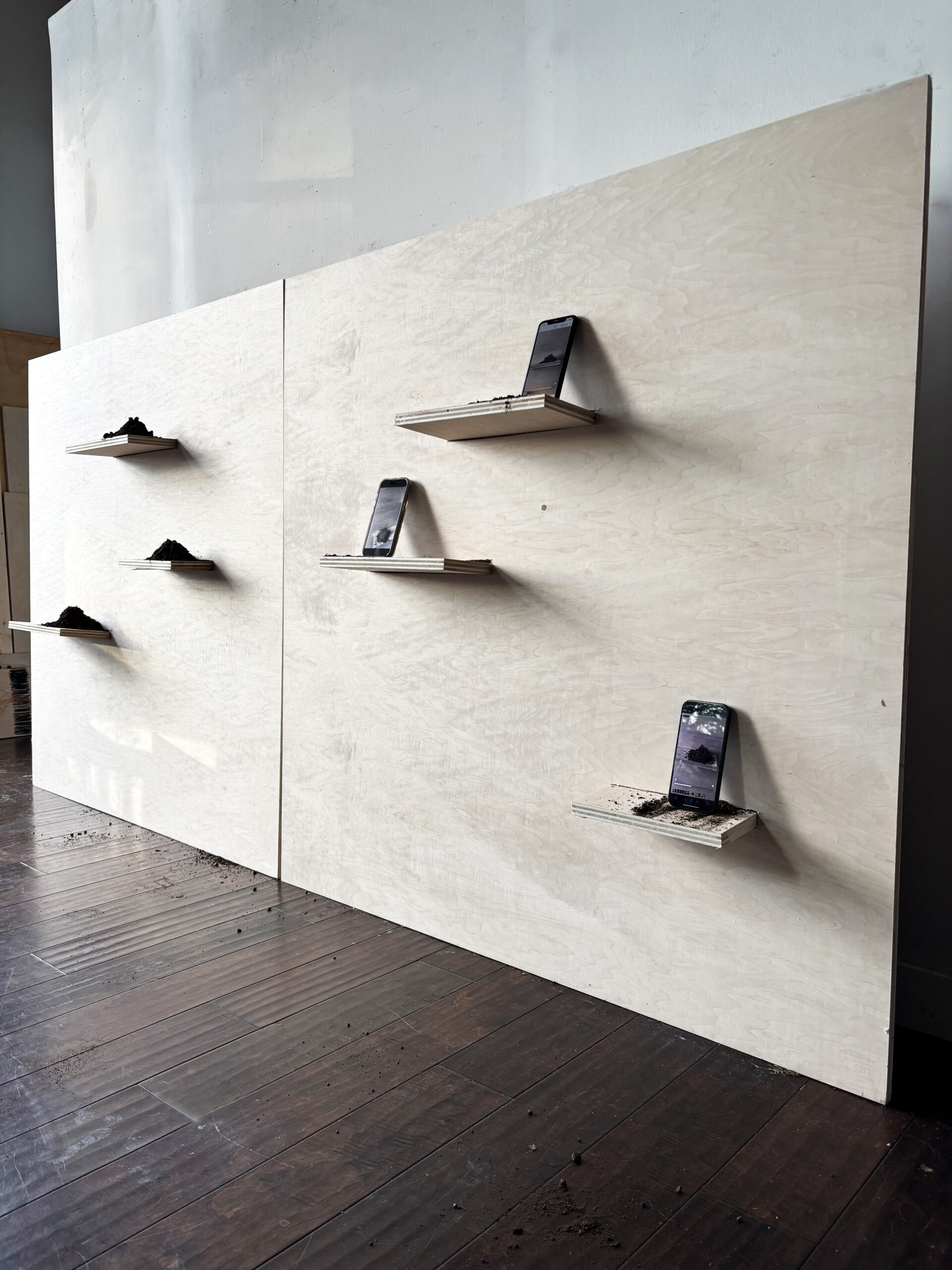
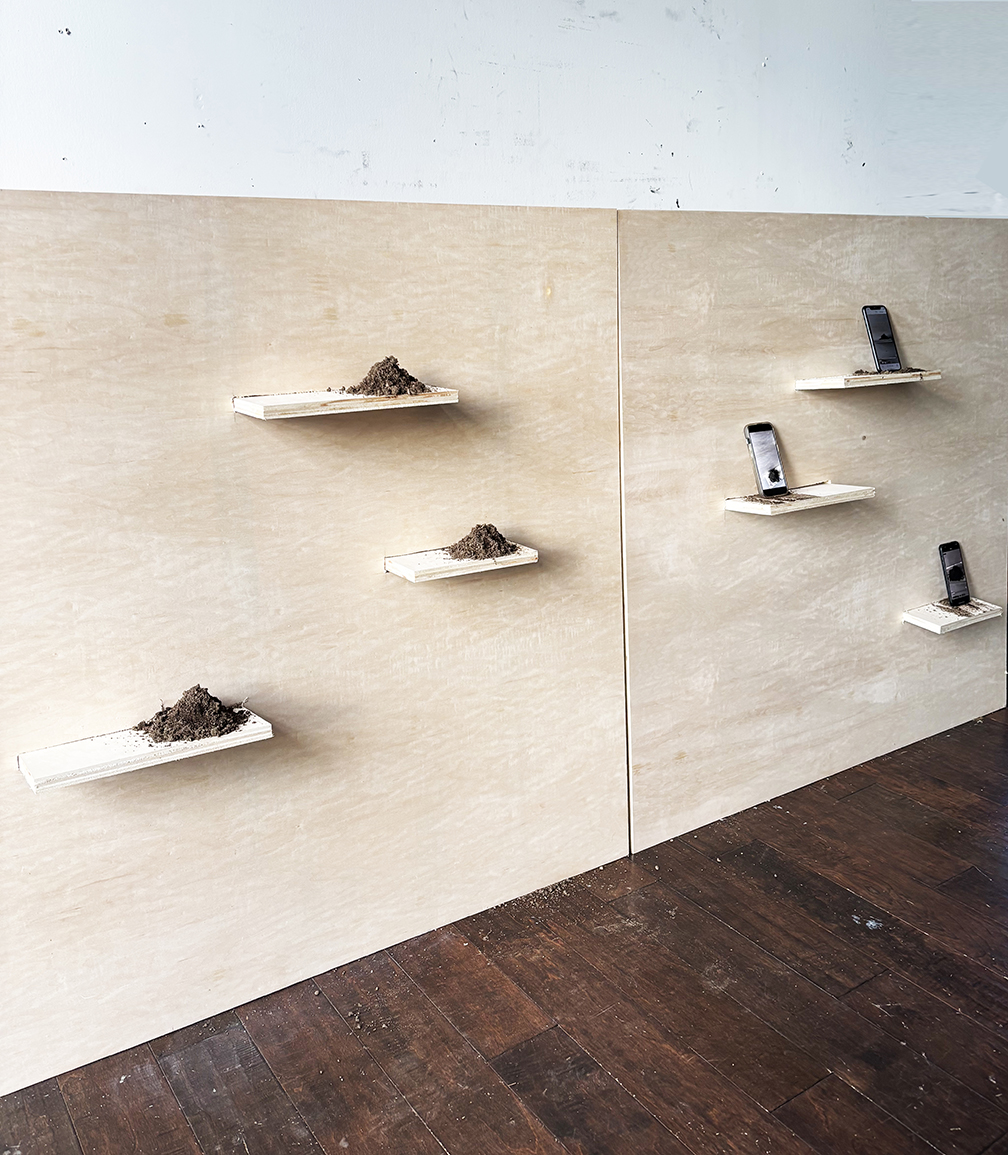
Lararia
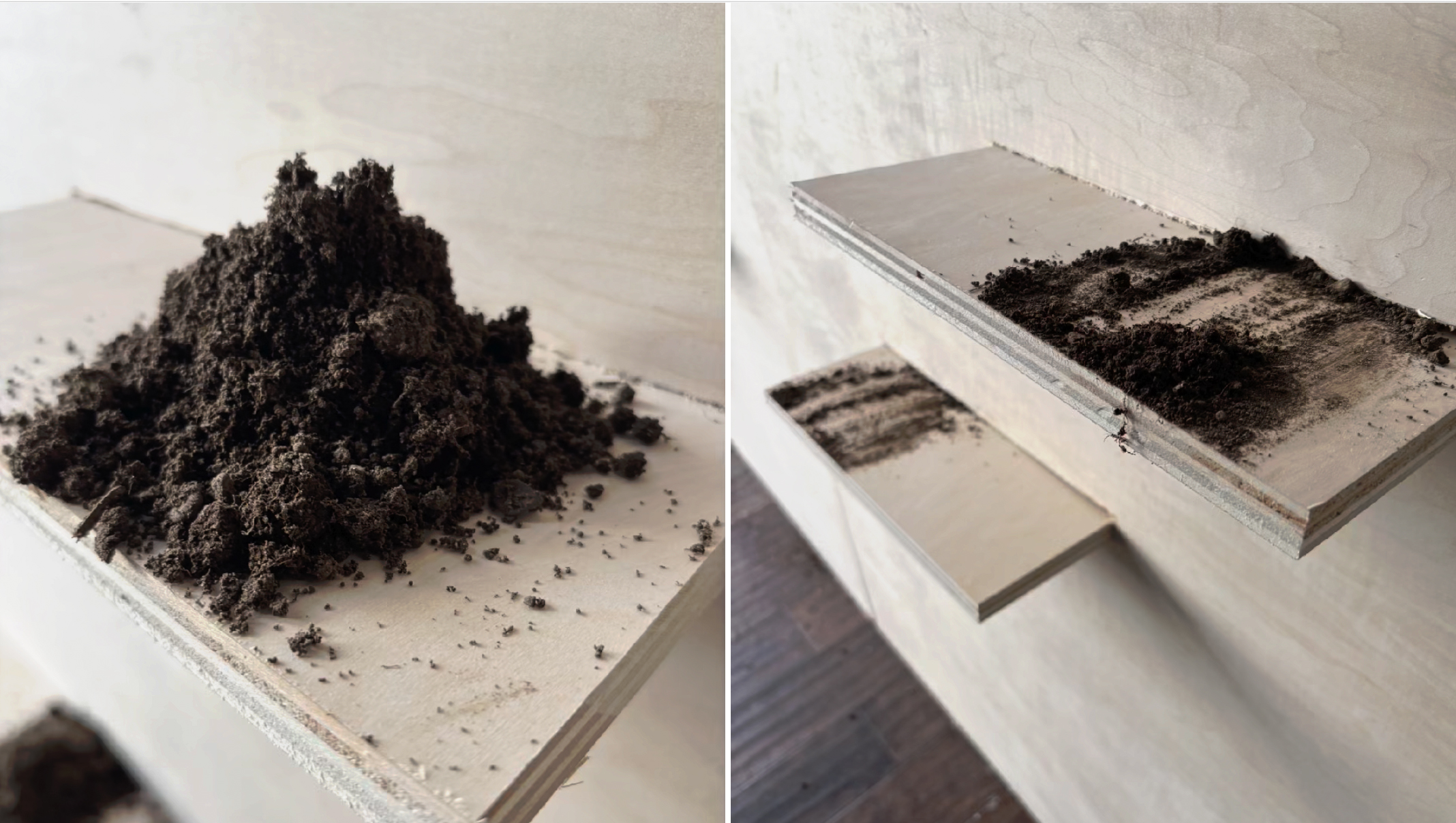
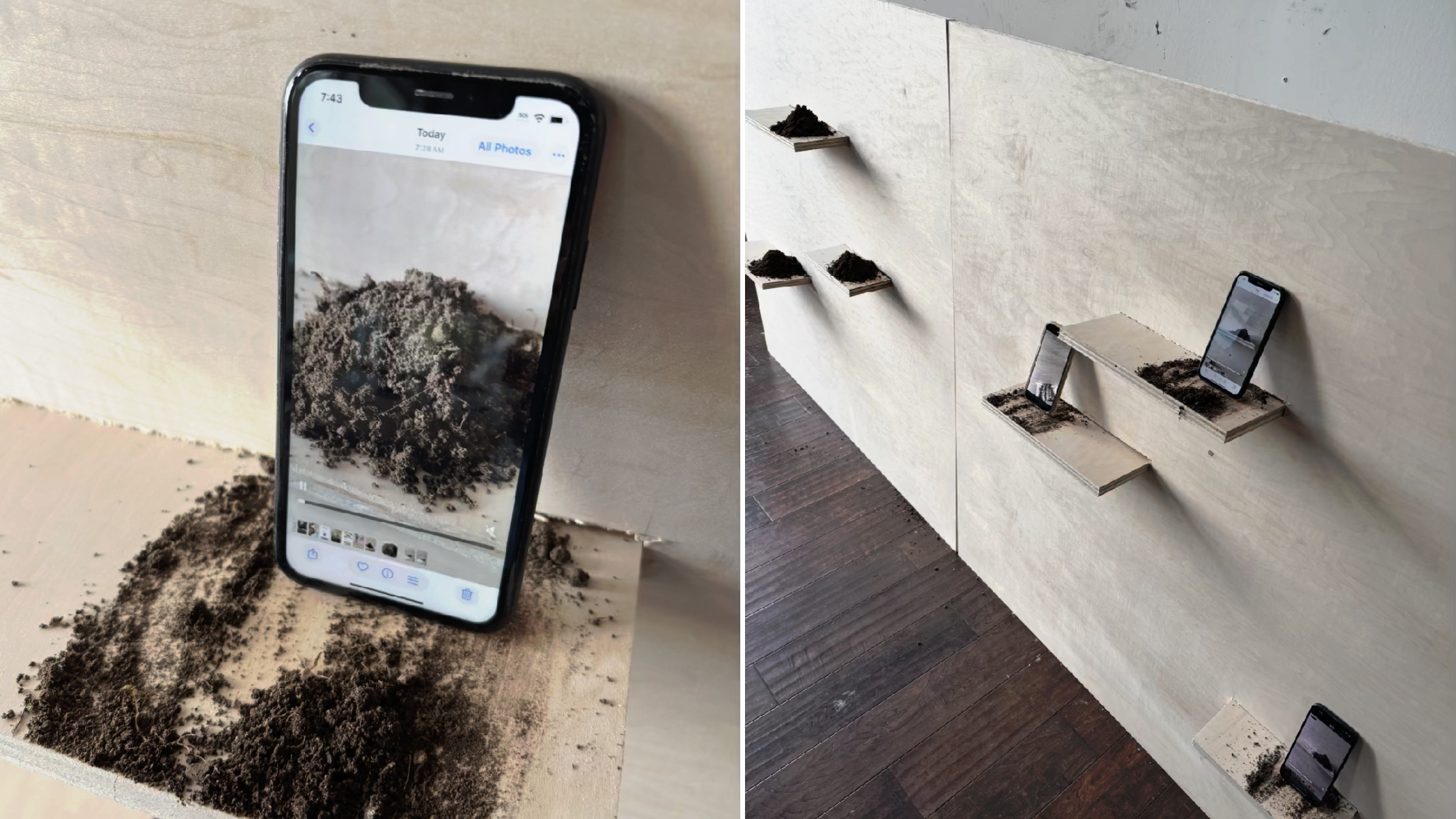
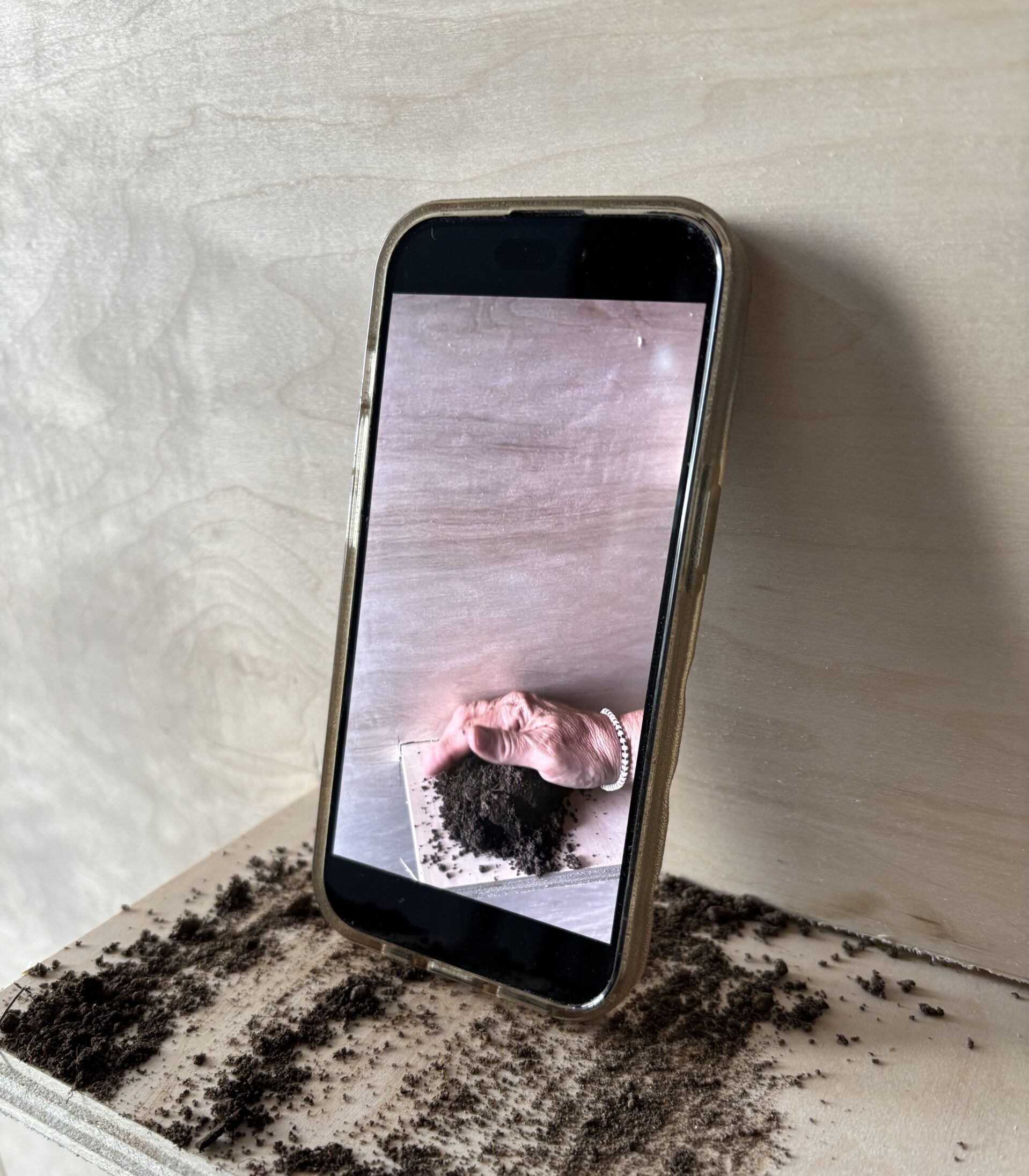
8ft x 4 ft, Plywood, Earth, Repurposed Cell Phones, 2026.
Lararia, household shrines in Roman homes dedicated to the guardian spirits, inspired my exploration of incorporating natural materials into my work. I experimented with seeds, stones, and earths on a shelf embedded in a simple plywood sheet which symbolized resource consumption, industry, and the waste of human activity. The earths engaged with the manufactured wood, transforming the simple shelf into an altar-like pedestal. Removing the earths left a residual path, creating the impression of something having been removed. I experimented with video, capturing a human hand removing dirt. The resulting work questions our intrigue with new technology and the loss of our connection to the Earth.